
Ebook Download Gulag: A History
When some other peoples still really feel so hard to discover this publication, you could not deal with that problem. Your means to use the net link and participate in this website is right. You could find the resource of the book as Gulag: A History that will not run out whenever. For making terrific problem, it becomes one of the ways that lead you to constantly utilize and use the innovative innovation.
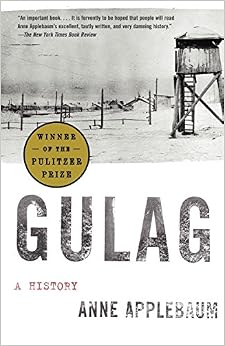
Gulag: A History

Ebook Download Gulag: A History
Checking out a book Gulag: A History is type of simple task to do each time you desire. Also checking out whenever you really want, this activity will not interrupt your various other tasks; lots of people typically review the books Gulag: A History when they are having the downtime. Exactly what about you? Just what do you do when having the leisure? Do not you invest for ineffective things? This is why you have to get the book Gulag: A History and also aim to have reading routine. Reading this publication Gulag: A History will not make you ineffective. It will certainly give much more benefits.
Why need to be book Gulag: A History Publication is among the very easy resources to seek. By obtaining the writer and theme to obtain, you can locate many titles that provide their data to get. As this Gulag: A History, the motivating publication Gulag: A History will offer you just what you need to cover the work deadline. As well as why should be in this website? We will ask initially, have you a lot more times to opt for going shopping the books as well as hunt for the referred book Gulag: A History in book store? Lots of people may not have enough time to find it.
This is not just about the perfections that we will certainly provide. This is also about exactly what points that you can worry about to make much better idea. When you have various principles with this publication, this is your time to satisfy the impressions by reading all material of the book. Gulag: A History is likewise among the home windows to get to and open the globe. Reading this book can assist you to discover brand-new globe that you might not find it previously.
Associated with this problem, you will certainly likewise discover May books that can be resources for your life. It is not just this sort of topic; you may also discover others just as good as this publication to offer. Obviously, exactly what we provide is just what best in this globe. So, you may not be worried to pick Gulag: A History as one of motivating analysis book. Now, regardless of what to do, you need to get this book as well as obtain adhering to the system to be much easier and also quicker.
Review
“An important book. . . . It is fervently to be hoped that people will read Anne Applebaum’s excellent, tautly written, and very damning history.” —The New York Times Book Review“The most authoritative—and comprehensive—account of this Soviet blight ever published by a Western writer.” —Newsweek“A titanic achievement: learned and moving and profound. . . . No reader will easily forget Applebaum’s vivid accounts of the horrible human suffering of the Gulag.” —National Review“A tragic testimony to how evil ideologically inspired dictatorships can be.” –The New York Times“Lucid, painstakingly detailed, never sensational, it should have a place on every educated reader’s shelves.” –Los Angeles Times“Magisterial. . . . Certain to remain the definitive account of its subject for years to come. . . . An immense achievement.” —The New Criterion“An excellent account of the rise and fall of the Soviet labor camps between 1917 and 1986. . . . A splendid book.” —The New York Review of Books“Should become the standard history of one of the greatest evils of the 20th century.” —The Economist “Thorough, engrossing . . . A searing attack on the corruption and the viciousness that seemed to rule the system and a testimonial to the resilience of the Russian people. . . . Her research is impeccable.” –San Francisco Chronicle “An affecting book that enables us at last to see the Gulag whole. . . . A valuable and necessary book.” –The Wall Street Journal “Ambitious and well-documented . . . Invaluable . . . Applebaum methodically, and unflinchingly, provides a sense of what it was like to enter and inhabit the netherworld of the Gulag.” –The New Yorker“[Applebaum’s] writing is powerful and incisive, but it achieves this effect through simplicity and restraint rather than stylistic flourish. . . . [An] admirable and courageous book.” –The Washington Monthly“Monumental . . . Applebaum uses her own formidable reporting skills to construct a gripping narrative.” –Newsday“Valuable. There is nothing like it in Russian, or in any other language. It deserves to be widely read.” –Financial Times“A book whose importance is impossible to exaggerate. . . . Magisterial . . . Applebaum’s book, written with such quiet elegance and moral seriousness, is a major contribution to curing the amnesia that curiously seems to have affected broader public perceptions of one of the two or three major enormities of the twentieth century.” –Times Literary Supplement“A truly impressive achievement . . . We should all be grateful to [Applebaum].” –The Sunday Times (London) “A chronicle of ghastly human suffering, a history of one of the greatest abuses of power in the story of our species, and a cautionary tale of towering moral significance . . . A magisterial work, written in an unflinching style that moves as much as it shocks, and that glistens with the teeming life and stinking putrefaction of doomed men and rotten ideals.” –The Daily Telegraph (London)“No Western author until Anne Applebaum attempted to produce a history of the Gulag based on the combination of eyewitness accounts and archival records. The result is an impressively thorough and detailed study; no aspect of this topic escapes her attention. Well written, accessible…enlightening for both the general reader and specialists.” —The New York Sun“For the raw human experience of the camps, read Solzhenitsyn’s One Day in the Life of Ivan Denisovich or Irina Ratushinskaya’s Grey is the Color of Hope. For the scope, context, and the terrible extent of the criminality, read this history.” —Chicago Tribune
Read more
From the Inside Flap
The Gulag--a vast array of Soviet concentration camps that held millions of political and criminal prisoners--was a system of repression and punishment that terrorized the entire society, embodying the worst tendencies of Soviet communism. In this magisterial and acclaimed history, Anne Applebaum offers the first fully documented portrait of the Gulag, from its origins in the Russian Revolution, through its expansion under Stalin, to its collapse in the era of glasnost. Applebaum intimately re-creates what life was like in the camps and links them to the larger history of the Soviet Union. Immediately recognized as a landmark and long-overdue work of scholarship, Gulag is an essential book for anyone who wishes to understand the history of the twentieth century.
Read more
See all Editorial Reviews
Product details
Paperback: 736 pages
Publisher: Anchor Books (April 9, 2004)
Language: English
ISBN-10: 9781400034093
ISBN-13: 978-1400034093
ASIN: 1400034094
Product Dimensions:
5.2 x 1.4 x 8 inches
Shipping Weight: 1.6 pounds (View shipping rates and policies)
Average Customer Review:
4.5 out of 5 stars
261 customer reviews
Amazon Best Sellers Rank:
#25,923 in Books (See Top 100 in Books)
I knew nothing about USSR/SOVIET UNION/RUSSIAN history until I read a book about the German Invasion, "LENINGRAD-THE EPIC SIEGE 1941-1944", by Anna Reid. A tremendous book, which was the beginning of my obsession with life under Josef Stalin, a most brutal Dictator, right up next to Mao and Hitler, in the 20th Century. I needed to know more, and I can tell you that this is, by far, one of the greatest books I've Ever read, regardless of the genre. I'm no fancy critic, but if you really want to know what tortures and torments Josef Stalin and his "henchmen", for lack of a better word, perpetrated on his own people, and the people of other, surrounding countries, you must read this book. I was particularly interested in reading about the GULAG, a word that literally struck terror into me while I was growing up. Which shows just how much a word such as GULAG, or Siberia, could scare a girl who was 10yrs old in 1975. Author Anne Applebaum has written a very detailed, yet human book about the Concentration Camps, Forced Labor Camps, Prison Camps, and all the regular prisons, too. All I can really say is how profoundly this book has affected my life. There are so many stories, right out of survivors mouths, that I would have to re-read a page, here and there, just to make sure I had read it correctly. Also, many archives became available for people to research, and Ms. Applebaum does a magnificent job of taking these records of the atrocities, inflicted on at least 20 million people, and writing about them in such a way you are literally hooked from page one. It is worth every single moment of your time to read it. Incomprehensible and shocking sound like compliments when trying to describe this amazing literary feat. Ms. Applebaum received a Pulitzer Prize for this masterpiece, and deservedly so. Every school should be using this as a classroom text. It simply must be read!Absolutely 5 stars; I give it infinite stars!Thank you,connie markarian
This is not an easy book to read, and I’m sure it was much harder to write in such a way that the reader would read it. It is also not a mere listing of the number who died or concise descriptions of the tortures employed for whatever purpose, although those matters are discussed if you are so interested.It is an overview of the ‘staat in staat’ of the Gulag; once you ‘entered’ the organization, Soviet public law (such as it was) became irrelevant. You were no longer a Soviet citizen; you were a denizen of the Gulag. And under Stalin, your arrest was a purely arbitrary matter; you might have as easily been hit by lightning, and for the same ‘reason’.But before a reader gets to the exploration of the subject, the author makes the introduction interesting on its own; Ms. Applebaum examines the asymmetry of Western response to Hitler, a universally despised mass murderer, compared to Stalin, who, by direct order, starved more Ukrainians to death than the number of Jews Hitler managed to kill in his ‘industrialized’ murder machines. Even now, people in the EU and the US who would never hint of a defense of Hitler will dismiss Stalin’s crimes as trivial, and often claim his show trials as, well, maybe justified. Those need to read Judt in “Post Warâ€, (certainly no ‘capitalist tool’), who, examining all of the evidence, has to admit that ‘central planning leads to centralized murder’. But there remain in the West those who still, in spite of all evidence continue to hope otherwise.Specifically, she mentions Heidegger, whose early flirtation with the Nazis ruined his reputation, while Sarte was given a pass for taking an ‘omelets and broken eggs’ position, as was Camus, not to mention that pathetic excuse for a journalist William Durante, who originated that despicable phrase.She excuses that asymmetry in a way which seems far too kind; simply assuming the Western left was forgivably stupid. We continue to live with that stupidity, and I do not see it as forgivable; “Useful idiots†seems more than appropriate here.Regardless, we are led through the Gulag from arrest to, sometimes, release. Yes, many were released, quite a few near death to die shortly after to avoid another death stat on the camp’s record. And then quite often those released were released at the camp entrance with no resources to return to their homes, nor ‘clean’ papers. Some few who were released were given official ‘forgiveness’ and, if they could find their way ‘home’, might return to a normal life. Suffice to say, the system is revealed as it was: Slave labor, under horrible conditions, and with scant chance of return to normality.Not surprisingly, it seems the cruelty was (largely) not directed from Moscow, but was simply a product of the same dystopian Soviet system which produced thousands of shoes, all of the same size; there was no incentive for the workers to do other than the least they could. Ms. Applebaum quotes Solzhenitsyn pointing out that the zeks went thirsty not by design, but because the guards would have to fetch the water and carry it back to the zeks; they’d rather take the time for a smoke. Indeed, the banality of evil.There is far more in the detailed examination of the cultures within the camps (and prisons) zeks, trustys, guards, administrators, and finally an accounting of the delayed release of the political prisoners; it is all worth reading as it clearly defines the Soviet leadership’s dismissal of the matter; the Gulag was part and parcel of the evil of communism.For those still trying to put lipstick on the commie pig, I’m sure you’ll find details to dispute. For the rest of us, it is far beyond worthy of reading.
My wife and I have been surveying Russian history, and we came across this excellent, deep, thoughtful, and comprehensive book. This is an excellent book to read before reading Solzhenitsyn's Gulag Archipelago, because Applebaum presents the history of the Gulag's development and implementation in a way that amplifies Solzhenitsyn.We would be very interested in Applebaum's opinions on Kotkin's recent book on Stalin, which also covers the period of the creation and implementation of the Gulag.Applebaum's writing reminded us of another excellent writer from our college days, Jessica Tuchman. This was an excellent and engrossing book.
I ordered this book at the same time as the author’s Red Famine, a look at Stalin’s largely manufactured famine centered in the Ukraine. I didn’t much enjoy Red Famine and wasn’t holding out much hope for this work. The author’s writing style in Red Famine was not reader friendly and I found it a chore to get through. However, for some reason, I tolerated this work much better. Perhaps it was the subject matter, which seemed to allow for more interesting reading.As the title suggests, this work deals with the history of the Soviet gulag system of penal camps and relocation centers from the 1920s to their discontinuance in the 1950s. Unlike Red Famine, this book contains numerous personal stories and observations by those that survived the camps. As a result, it was easier to read and far more captivating than Red Famine. I can recommend this work for anyone interested in the subject matter, or Soviet history in general.
Gulag: A History PDF
Gulag: A History EPub
Gulag: A History Doc
Gulag: A History iBooks
Gulag: A History rtf
Gulag: A History Mobipocket
Gulag: A History Kindle
0 komentar:
Posting Komentar